
Saudi Arabia Occupational Fitness Screening
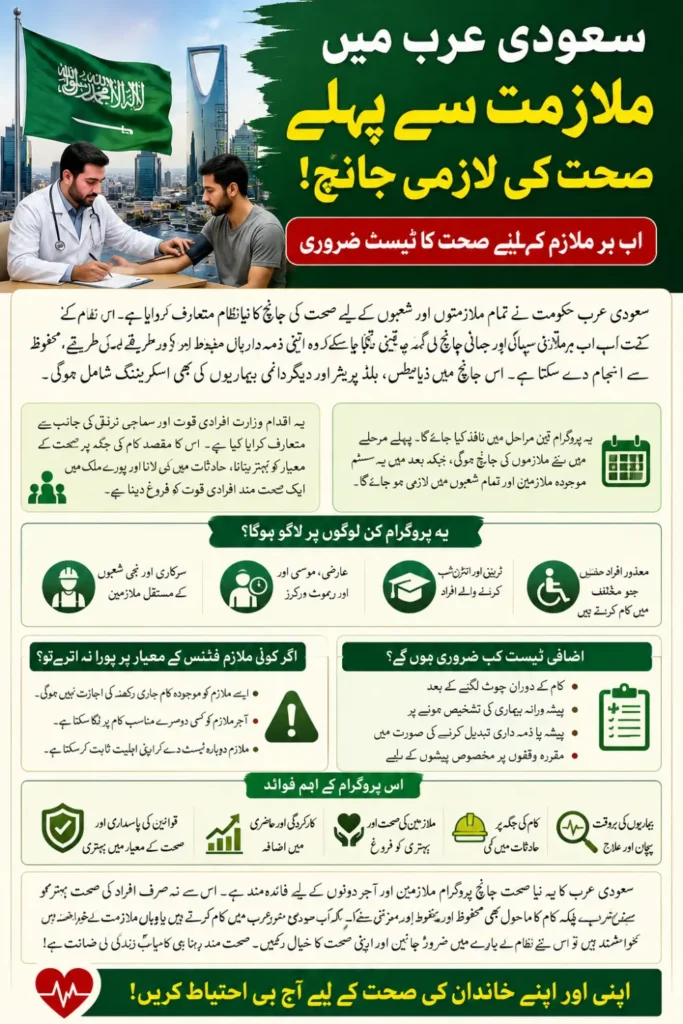
Saudi Arabia is introducing a new occupational fitness screening system that will gradually become mandatory for workers across all professions and economic sectors. The initiative also includes non-communicable disease (NCD) screenings to help ensure that employees are physically fit to perform their job duties safely and effectively.
The new framework has been introduced by the Ministry of Human Resources and Social Development and will be implemented in phases. The program aims to improve workplace health standards, reduce occupational risks, and support a healthier workforce throughout the Kingdom.
Pakistan E-Passports 2026: QR Code Payment System and Online Passport Services Announced
What Is Saudi Arabia Occupational Fitness Screening?
Occupational fitness screening is a medical assessment designed to determine whether an individual is physically and medically capable of performing a specific job. These examinations help identify health conditions that may affect workplace safety or job performance.
Under the new regulations, occupational fitness assessments will be combined with screenings for non-communicable diseases such as diabetes, hypertension, and other long-term health conditions. The goal is to detect health risks early and promote a safer working environment for employees and employers alike.
Three-Phase Rollout of the New Screening Program
Saudi Arabia will implement the occupational fitness screening program in three stages. The first phase focuses on individuals applying for new jobs, while later stages will expand coverage to existing employees and eventually all sectors.
This gradual approach allows employers and healthcare providers to adapt to the new requirements efficiently. It also helps ensure that the screening process can be carried out consistently across different industries and workplaces.
Occupational Fitness Screening Implementation Phases
| Phase | Target Group | Purpose |
|---|---|---|
| Phase 1 | New job applicants | Pre-employment health assessment |
| Phase 2 | Existing workers in higher-risk workplaces | Expanded health monitoring |
| Phase 3 | All professions and sectors | Nationwide implementation |
Who Will Be Covered Under the New Regulations?
The occupational fitness screening requirements will apply to a wide range of workers. This includes employees in public-sector organizations, private companies, and non-profit institutions operating within Saudi Arabia.
Coverage will also extend to temporary workers, seasonal employees, trainees, remote workers, and people with disabilities. The broad scope of the program reflects the government’s commitment to improving occupational health standards across the entire labor market.
Prime Minister Apna Ghar Scheme Expanded as PM Orders Faster Housing Loan Approvals
Key Groups Included in the Screening Program
- Permanent employees working in public and private sectors.
- Temporary, seasonal, and remote workers.
- Trainees and internship participants.
- Employees with disabilities working in different sectors.
The inclusion of multiple worker categories ensures that occupational health standards are applied fairly and consistently. It also helps employers identify potential workplace risks before they affect productivity or employee wellbeing.
Pre-Employment Medical Assessment Requirements
Under the first phase of implementation, job applicants must complete occupational fitness screening before they can officially begin work. Their examination results must be reviewed and approved by a physician specializing in occupational medicine.
This requirement is intended to confirm that workers are capable of performing the duties associated with their roles. Employers will need to ensure that the approval process is completed before onboarding new employees.
What Happens if a Worker Does Not Meet Fitness Requirements?
Employees who do not meet occupational fitness standards may not be allowed to continue working in their current position. In such cases, employers will be required to consider alternative measures based on the employee’s condition and job requirements.
Possible solutions may include assigning the employee to a different role or modifying work responsibilities. Workers will also have the opportunity to undergo additional examinations to demonstrate their ability to perform required duties.
Situations That May Require Additional Screening
- Following a workplace injury.
- After an occupational disease is diagnosed.
- When changing professions or job responsibilities.
- During periodic evaluations required for specific occupations.
Additional assessments help ensure that employees remain fit for their assigned tasks. These evaluations also support workplace safety by identifying any changes in a worker’s health status over time.
Main Objectives of Saudi Arabia Occupational Fitness Screening
| Objective | Expected Benefit |
| Early disease detection | Identify health issues before they worsen |
| Workplace safety | Reduce occupational risks and injuries |
| Employee wellbeing | Promote healthier working conditions |
| Workforce productivity | Improve performance and attendance |
| Health compliance | Strengthen occupational health standards |
Benefits for Workers and Employers
For employees, occupational fitness screening can help identify health concerns at an early stage, allowing them to seek appropriate medical advice and treatment. Regular assessments may also contribute to improved health awareness and long-term wellbeing.
Employers benefit from a healthier workforce, reduced workplace incidents, and better compliance with occupational health regulations. The program can also support productivity by ensuring employees are assigned to roles that match their physical capabilities.
Conclusion
The Saudi Arabia Occupational Fitness Screening program represents a significant step toward strengthening workplace health and safety standards across the Kingdom. Through phased implementation, the government aims to ensure that workers in all sectors receive appropriate health assessments and support.
As the program expands, both employees and employers will need to adapt to the new requirements. The initiative is expected to contribute to safer workplaces, improved workforce health, and stronger occupational health practices throughout Saudi Arabia.
FAQs
What is Saudi Arabia Occupational Fitness Screening?
It is a mandatory medical assessment program designed to determine whether workers are medically fit for their job roles and workplace conditions.
Who must undergo occupational fitness screening in Saudi Arabia?
The program will eventually apply to employees in public, private, and non-profit sectors, including temporary and remote workers.
Can a worker start a job before receiving screening approval?
No. New job applicants must receive approval from an occupational medicine specialist before starting employment.
What happens if an employee fails the occupational fitness assessment?
The employer may need to change the employee’s role or profession, depending on the assessment results and job requirements.
When can additional occupational fitness assessments be required?
Additional evaluations may be required after workplace injuries, occupational diseases, job changes, or periodic health reviews.
E Learn She Earn Program 2026 Registration Form How To Fill Full Details