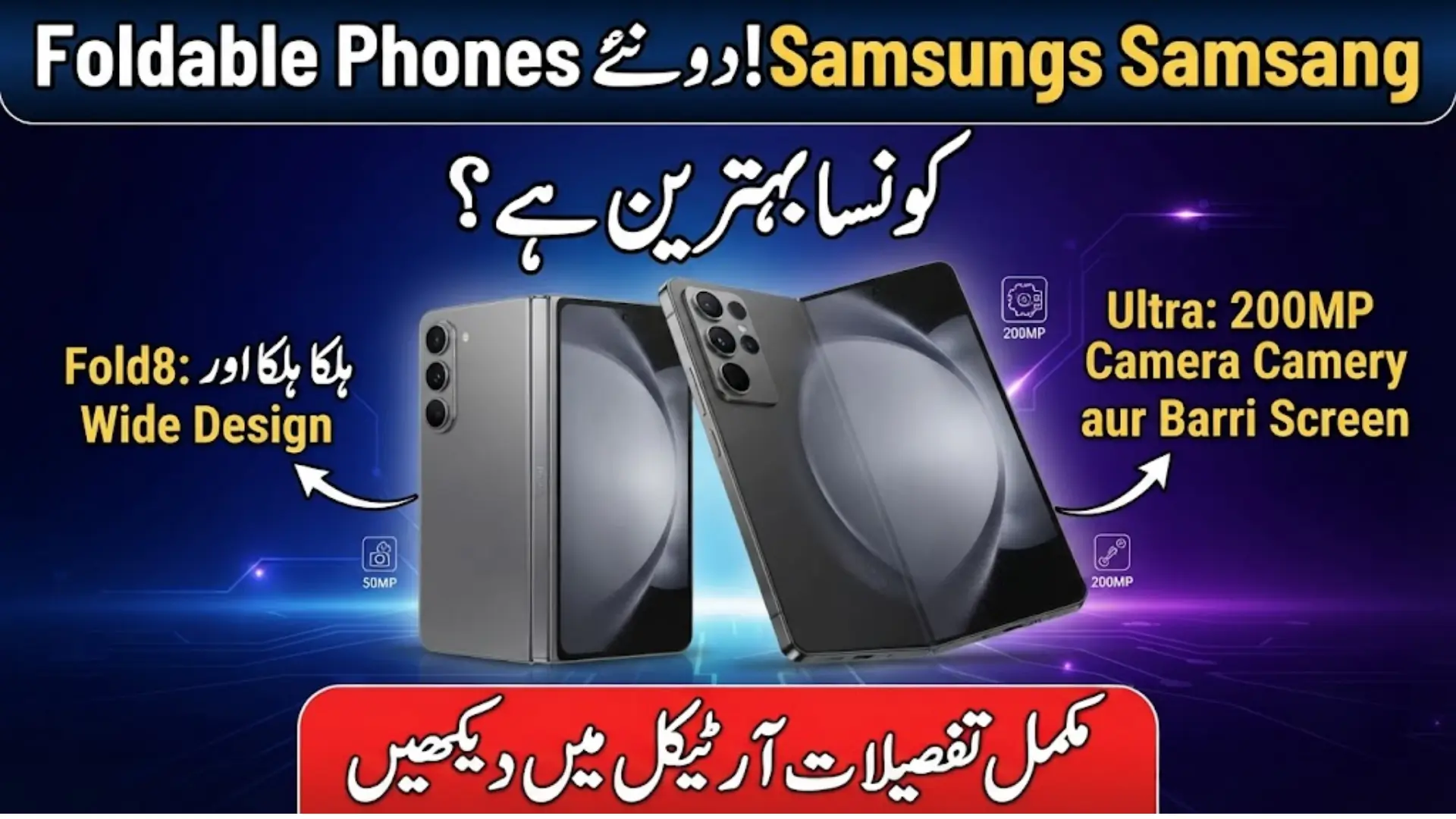
Samsung Galaxy Z Fold8 and Fold8 Ultra
Samsung has introduced two new book-style foldables at once, the Galaxy Z Fold8 and the Galaxy Z Fold8 Ultra, at its Galaxy Unpacked event in London. This is a notable shift for Samsung, since the company has traditionally released just one Fold model each year. This time, buyers get two distinct choices built for slightly different needs.
The standard Galaxy Z Fold8 introduces a completely new wide-format design, while the Galaxy Z Fold8 Ultra continues as the more premium, camera-focused option in the lineup. Below is a simple breakdown of both devices, covering design, performance, cameras, battery life, and pricing, so you can clearly understand what separates the two.
Galaxy Z Fold8 Design and Display
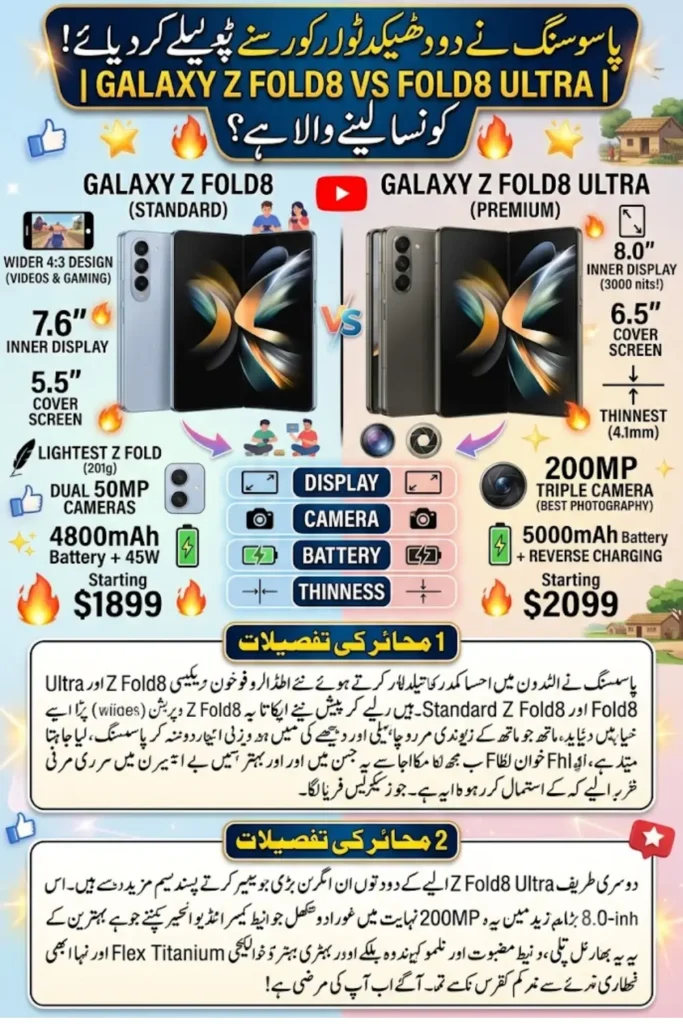
The Galaxy Z Fold8 comes with a 7.6-inch foldable AMOLED display featuring a 2448 by 1848 resolution and a smooth 120Hz refresh rate. Samsung has adjusted the aspect ratio to 4:3, giving the phone a noticeably wider shape once opened compared to earlier Fold models. On the outside, it includes a 5.5-inch AMOLED cover screen, and Samsung describes this as its lightest Z Fold device released so far, weighing 201 grams.
This wider 4:3 layout is designed with a clear purpose in mind. Samsung says the format works better for watching videos and gaming when held normally, while rotating the phone shifts it into a 3:4 layout that feels more natural for reading books or browsing the web. The 5.5-inch cover screen, meanwhile, is meant to feel closer to a regular smartphone experience, making the Fold8 easier to use without unfolding it for quick tasks.
Galaxy Z Fold8 Ultra Design and Display
The Galaxy Z Fold8 Ultra steps things up with a larger 8.0-inch Dynamic AMOLED inner display, offering a 2256 by 2504 resolution, 120Hz refresh rate, HDR support, and peak brightness reaching up to 3,000 nits. Its cover screen measures 6.5 inches with a 2520 by 1080 resolution, also running at 120Hz. At just 4.1mm when unfolded, Samsung calls this the thinnest Galaxy Z Fold built to date.
To achieve this slim profile, Samsung says it refined the folding magnets, hinge mechanism, display tension, and edge design for a smoother folding motion. The device also uses Samsung’s Flex Titanium technology, which is aimed at reducing how visible the display crease looks over time while improving overall durability. Together, these changes position the Ultra as the more refined, premium option for buyers who prioritize build quality.
Performance and Software Across Both Models
Both the Galaxy Z Fold8 and Fold8 Ultra run on the same Snapdragon 8 Elite Gen 5 for Galaxy chipset, so raw performance stays consistent across the lineup regardless of which model you choose. The standard Fold8 is available with 12GB RAM paired with either 256GB or 512GB storage, with a higher-tier option offering 16GB RAM and 1TB storage for users who need more space. Neither device supports expandable storage through a memory card.
Software-wise, both phones ship with Samsung’s latest One UI experience built on Android, bringing Galaxy AI tools to the entire Fold8 lineup rather than limiting them to the Ultra model. This consistency means most day-to-day software features, animations, and multitasking tools behave the same way on both devices, with the real differences showing up mainly in hardware rather than the operating system itself.
Samsung Galaxy Z Flip8 Review: Design, Camera, Battery and Price Details
New Galaxy AI Features on the Fold8 Series
Samsung has introduced several new Galaxy AI tools specifically for this generation. The Galaxy Z Fold8 Ultra gets access to Gemini Notebook, a feature that can summarize PDFs and audio recordings before converting them into different formats such as presentation slides, AI-generated videos, podcasts, or quizzes. This is aimed at users who deal with heavy documents or study material regularly.
Samsung has also expanded its agentic AI tools with a feature called Now Nudge, which can suggest opening compatible apps in Multi Window when it detects that multitasking would help. During the Unpacked event, Samsung demonstrated the standard Fold8 using Gemini to search for hotels near a location while the user kept using other apps, letting them review suggestions before confirming a booking. This shows Samsung pushing AI beyond simple assistance and toward handling small tasks on the user’s behalf.
Camera Comparison Between Fold8 and Fold8 Ultra
The Galaxy Z Fold8 uses a dual rear camera setup, consisting of a 50MP main camera with an f/1.8 aperture alongside a 50MP ultrawide camera with an f/1.9 aperture. For selfies and video calls, it includes a 10MP inner camera and a separate 10MP camera on the cover screen. This setup is solid for everyday photography but noticeably simpler than what the Ultra model offers.
The Galaxy Z Fold8 Ultra instead uses a triple rear camera system built around a 200MP main sensor with optical image stabilization, paired with a 50MP ultrawide camera and a 10MP telephoto lens offering 3x optical zoom. This makes the Ultra the clear choice for anyone who takes photography seriously, while the standard Fold8 remains a practical option for users who mainly want a capable, everyday camera without extra complexity.
- Fold8 Ultra offers a larger main display, thinner profile, and significantly higher-resolution camera
- Standard Fold8 offers a lighter body, wider 4:3 format, and a simpler dual-camera setup at a lower price
- Choose the Galaxy Z Fold8 if you prioritize a lighter device and prefer the wider screen format for reading and browsing
- Choose the Galaxy Z Fold8 Ultra if camera quality, display size, and build refinement matter most to you
Battery Life and Charging
The Galaxy Z Fold8 comes with a 4,800mAh battery and supports 45W wired charging along with standard wireless charging. Samsung states the device can deliver up to 26 hours of video playback, which should comfortably cover a full day of typical use for most people, including video streaming and regular app usage.
The Galaxy Z Fold8 Ultra steps up to a larger 5,000mAh battery, also supporting 45W wired charging and wireless charging, but it adds reverse wireless charging as an extra convenience. This means the Ultra can be used to charge other compatible devices, such as earbuds or a smartwatch, directly from its own battery, which is a useful addition for users who rely on multiple Samsung accessories daily.
Pricing and Availability
Pricing reflects the clear positioning between these two models, with the Ultra sitting firmly in premium territory. The table below breaks down the starting prices for both devices as announced at launch.
| Model | Starting Price |
|---|---|
| Galaxy Z Fold8 | $1,899 |
| Galaxy Z Fold8 Ultra | $2,099 |
Both models are being positioned to appeal to different types of buyers rather than one simply replacing the other. Actual retail pricing will vary depending on your region, local taxes, and any carrier-specific deals available at launch.
Chery Tiggo PHEV Price Increase 2026: New Rates for Tiggo 7, 8 and 9 Explained
Full Specification Comparison
To make comparing both devices easier, here is a side-by-side look at their core specifications.
| Specification | Galaxy Z Fold8 | Galaxy Z Fold8 Ultra |
|---|---|---|
| Chipset | Snapdragon 8 Elite Gen 5 for Galaxy | Snapdragon 8 Elite Gen 5 for Galaxy |
| Main Display | 7.6-inch, 4:3, 120Hz | 8.0-inch, 120Hz, up to 3,000 nits |
| Cover Display | 5.5-inch, 120Hz | 6.5-inch, 120Hz |
| RAM | 12GB or 16GB | 12GB or 16GB |
| Storage | 256GB, 512GB, 1TB | 256GB, 512GB, 1TB |
| Rear Camera | 50MP main + 50MP ultrawide | 200MP main + 50MP ultrawide + 10MP telephoto |
| Battery | 4,800mAh, 45W wired charging | 5,000mAh, 45W wired charging, reverse wireless |
| Price | $1,899 | $2,099 |
Final Thoughts on the Galaxy Z Fold8 Lineup
Samsung’s decision to launch two Fold models at once shows a clear strategy shift, giving buyers a genuine choice rather than a single flagship with no alternative. The standard Galaxy Z Fold8 focuses on a lighter, wider design suited for everyday reading and browsing, while the Fold8 Ultra leans into premium build quality and a much stronger camera system for users willing to pay more.
Deciding between the two really comes down to what matters most for your daily use. If a sharper camera and a slightly larger display are worth the extra cost to you, the Ultra makes sense. If you prefer a lighter phone with a more budget-conscious price tag while still getting the core foldable experience, the standard Fold8 is likely the more practical pick.
Frequently Asked Questions
What is the price difference between the Fold8 and Fold8 Ultra? The Galaxy Z Fold8 starts at $1,899, while the Fold8 Ultra starts at $2,099. That is a $200 difference for the base storage configuration.
Which model has a better camera? The Galaxy Z Fold8 Ultra has a stronger camera system with a 200MP main sensor and telephoto zoom. The standard Fold8 uses a simpler dual 50MP setup.
Do both models use the same processor? Yes, both the Fold8 and Fold8 Ultra run on the Snapdragon 8 Elite Gen 5 for Galaxy chipset. Performance differences mainly come from RAM and storage tiers instead.
Which model has a bigger battery? The Fold8 Ultra has a 5,000mAh battery, slightly larger than the Fold8’s 4,800mAh battery. Both support 45W wired charging.
Is the Fold8 Ultra thinner than the standard Fold8? Yes, the Fold8 Ultra measures 4.1mm when unfolded, making it thinner than the standard Fold8. Samsung credits this to a refined hinge and Flex Titanium build.
Kia Stonic Installment Plan 2026: Price, Down Payment & Monthly Details Explained