Punjab Postgraduate Medical Training Policy
The Punjab Health Department has issued a new policy letter aimed at raising the quality of medical institutions and strengthening postgraduate medical education across the province. This update directly affects how doctors move forward with specialist training after completing their basic postgraduate qualifications, making it an important development for anyone currently working toward a career in medicine within Punjab’s public sector hospitals.
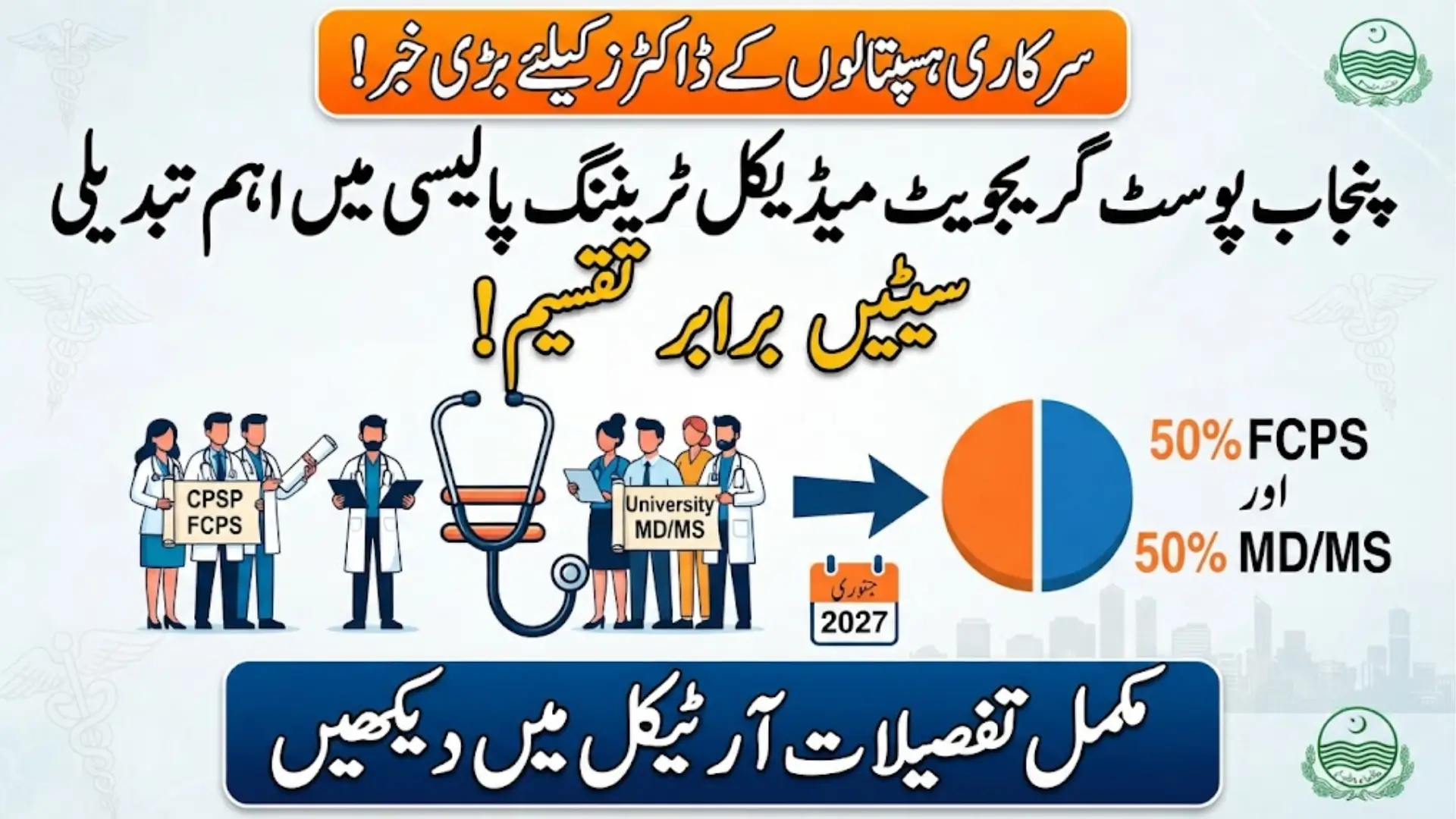
According to a department spokesperson, the provincial government has worked to ensure equal opportunities for candidates coming from both the College of Physicians and Surgeons Pakistan, commonly known as CPSP, and from medical universities offering MD and MS degrees. This article explains what the new postgraduate medical training policy means, how it changes the existing system, and what doctors should know before the new rules take effect.
Understanding Postgraduate Medical Training in Punjab
Before looking at what has changed, it helps to understand how postgraduate medical training generally works in Punjab. Doctors who want to become specialists typically choose one of two paths: they either pursue an FCPS qualification through CPSP, or they enroll in an MD or MS degree program through a recognized medical university. Both paths are widely respected and lead to specialist recognition, though they follow different examination and training structures.
A further stage in this system is known as the second fellowship, which was previously referred to as Level IV under Punjab’s Central Induction Program. This stage represents advanced, sub-specialist level training that doctors pursue after already completing their initial specialization. Understanding this background makes it easier to see exactly what the Health Department has changed and why the update matters to doctors at this stage of their careers.
Punjab Public-Private Partnership Authority Extends Deadline 2026 for 91 Vacancies
What the New Policy Changes for Second Fellowship Training
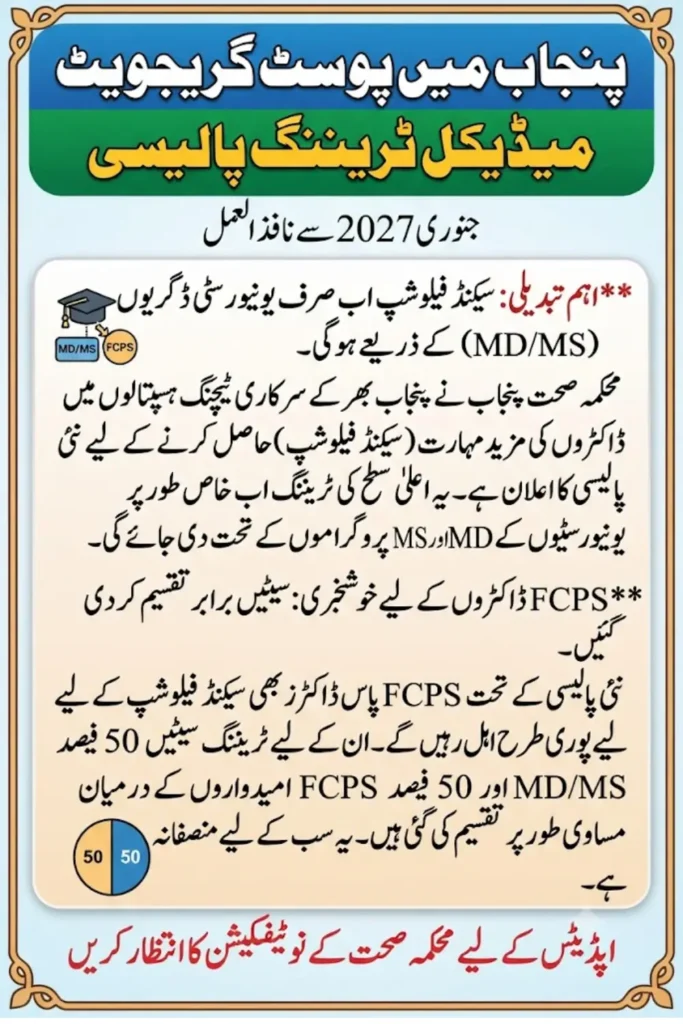
Under the newly issued guidelines, postgraduate training for the second fellowship, which used to be called Level IV, will now be offered exclusively through university degree programs leading to MD and MS qualifications. This means that going forward, the structured pathway for this advanced training stage will formally run through university-based degree programs rather than through a separate track.
At the same time, the department has clarified an important point that protects existing pathways. Candidates holding FCPS qualifications will remain fully eligible for second fellowship training, meaning CPSP-qualified doctors are not being excluded from this stage. This detail is particularly worth noting because earlier versions of Level-IV induction rules had restricted eligibility only to candidates with a Level-III MD or MS qualification, while FCPS candidates were not eligible at that time. The new policy therefore appears to widen access rather than limit it, since it now formally welcomes FCPS holders into a stage that was previously closed to them.
Seat Distribution for Second Fellowship Training
To keep the system fair for both groups of candidates, the Health Department has introduced a clear formula for how training seats will be shared. This applies specifically to second fellowship MD and MS training seats available in government teaching hospitals under the administrative control of the Specialized Healthcare and Medical Education Department.
| Candidate Category | Share of Available Seats |
|---|---|
| Candidates with University MD/MS Degrees | 50 percent |
| Candidates with CPSP FCPS Qualifications | 50 percent |
This even split is designed to create what the department describes as a level playing field, ensuring that neither university-trained candidates nor CPSP-trained candidates are given an unfair advantage when competing for limited government training seats. Doctors preparing for this stage should keep this fifty-fifty structure in mind while planning their application strategy for the January 2027 session.
Why the Health Department Introduced This Policy
The stated purpose behind this policy update is to further improve the overall standards of postgraduate medical education while maintaining a system that is fair, merit-based, and transparent for specialist training in public-sector teaching hospitals. Given how competitive postgraduate training slots already are in Punjab, formalizing clear rules helps reduce confusion and disputes among applicants from different qualification backgrounds.
The department also highlighted that graduates of Punjab’s medical institutions continue to gain recognition for Pakistan internationally through their professional skills and capabilities. This point reflects the broader intent behind the policy, which is not just administrative housekeeping but part of a continued effort to strengthen the reputation and quality of medical training produced within the province.
Important Points Candidates Should Keep in Mind
Doctors preparing to apply for second fellowship training under the new structure should pay attention to a few practical details that will directly affect their planning and eligibility.
- The new rules take effect from the January 2027 admission session, so candidates should track official announcements from the Health Department and the Specialized Healthcare and Medical Education Department for exact application timelines.
- Both FCPS and MD/MS candidates remain eligible, but since seats are split fifty-fifty between the two groups, competition within each category should be assessed separately rather than assuming a combined merit list.
What This Means for Aspiring Specialists
For doctors holding FCPS qualifications, this policy brings a reassuring update, since it confirms continued access to second fellowship training despite the broader shift toward university-based degree programs at this stage. This is a meaningful change compared to earlier induction rules, where FCPS candidates were not eligible for Level-IV training at all.
For MD and MS candidates, the policy formalizes their pathway into second fellowship training as the primary university-based route for this stage. Both groups of candidates are advised to wait for the detailed admission notification that typically follows a policy announcement of this kind, since exact criteria such as required documents, application forms, and induction schedules are usually released separately closer to the admission session.
How This Fits Into Punjab’s Broader Medical Education System
This announcement does not exist in isolation. Punjab already runs a structured postgraduate induction system, generally known as the Punjab Residency Program under the Central Induction Policy, which governs FCPS, MD, MS, and MDS training across the province’s teaching hospitals. Seat sharing between CPSP and university-based candidates is a familiar concept within this system, since similar arrangements have applied to earlier stages of postgraduate training in the past.
What makes this update significant is that it formally extends and clarifies this shared approach specifically for the second fellowship stage, an area where rules had previously been less inclusive of FCPS candidates. This shows a broader pattern of the province gradually aligning its various training tracks to offer more consistent and balanced opportunities across both qualification routes.
Conclusion
The Punjab Health Department’s new postgraduate medical training policy brings a clear structural change for second fellowship training, effective from the January 2027 admission session. University MD and MS degree programs will now serve as the formal pathway for this stage, while FCPS-qualified candidates remain fully eligible, with training seats split evenly between the two groups. Doctors planning to pursue this stage of specialization should stay updated through official department notifications as the admission session approaches.
Frequently Asked Questions
When will the new postgraduate medical training policy take effect? The new policy will take effect from the January 2027 admission session. Candidates should watch for official notifications closer to this date.
Are FCPS candidates still eligible for second fellowship training? Yes, candidates holding FCPS qualifications remain fully eligible for second fellowship training. This is a notable change from earlier Level-IV rules that excluded them.
How are second fellowship training seats divided between candidates? Seats in government teaching hospitals are divided equally, with 50 percent allocated to MD/MS degree holders and 50 percent to FCPS qualification holders. This applies specifically to seats under the Specialized Healthcare and Medical Education Department.
What was Level IV, and why is it now called second fellowship? Level IV was the earlier name used for advanced postgraduate training under Punjab’s Central Induction Program. It has since been renamed to second fellowship, though it refers to the same stage of specialist training.
Why did the Health Department introduce this new policy? The department introduced this policy to improve postgraduate medical education standards and maintain a fair, merit-based, and transparent system. It also aims to support Punjab’s reputation for producing internationally recognized medical graduates.